Frictionless, Experience Design

Frictionless — A new retail concept, built from the ground up

Brand identity, spatial design, and production for a client building one of the UK's first out the box autonomous retail experiences. The brief: make AI-powered technology feel effortless and human at every point of contact.

Brand identity, spatial design, and production for a client building one of the UK's first out the box autonomous retail experiences. The brief: make AI-powered technology feel effortless and human at every point of contact.

Services

Role Overview

Deliverables

Timeline

Timeline

Location

Understanding the brief

The client was launching one of the UK's first showcases of autonomous retail experiences.

Customers tap in, pick up what they need, and walk out. AiFi's camera and software infrastructure handles the rest. The technology was genuinely remarkable. The design challenge was making sure the experience didn't feel that way. No tills, no checkout queues, and cameras tracking every movement — all of which, without the right design response, could feel clinical or surveillance-heavy.

My role was to build a brand world that absorbed the complexity of the tech and replaced it with ease. The AI had to disappear. The brand had to do the work that a human member of staff would normally do.

Concept & Goals

Make a convenience-first retail environment feel like it belonged to a brand with genuine personality — not a functional afterthought.


The identity needed to work at every scale: from a loyalty card to a floor-to-ceiling wall graphic, and feel consistent whether you were in-store for 90 seconds or 20 minutes..


Goals:

  • Establish a full brand identity from scratch.

  • Build a modular environment system designed to be replicated, and if necessary transported and rebuilt.

  • Deliver every asset production-ready, signed off before it left my hands.

Make a convenience-first retail environment feel like it belonged to a brand with genuine personality — not a functional afterthought.


The identity needed to work at every scale: from a loyalty card to a floor-to-ceiling wall graphic, and feel consistent whether you were in-store for 90 seconds or 20 minutes..


Goals:

  • Establish a full brand identity from scratch.

  • Build a modular environment system designed to be replicated, and if necessary transported and rebuilt.

  • Deliver every asset production-ready, signed off before it left my hands.

Make a convenience-first retail environment feel like it belonged to a brand with genuine personality — not a functional afterthought.


The identity needed to work at every scale, from a loyalty card to a floor-to-ceiling wall graphic, and feel consistent whether you were in-store for 90 seconds or 20 minutes.


Goals:

Establish a full brand identity from scratch

Build a modular environment system that could be replicated

Ensure all print and spatial assets met production standards for physical installation.

Constraints & Tradeoffs

Designing around invisible infrastructure


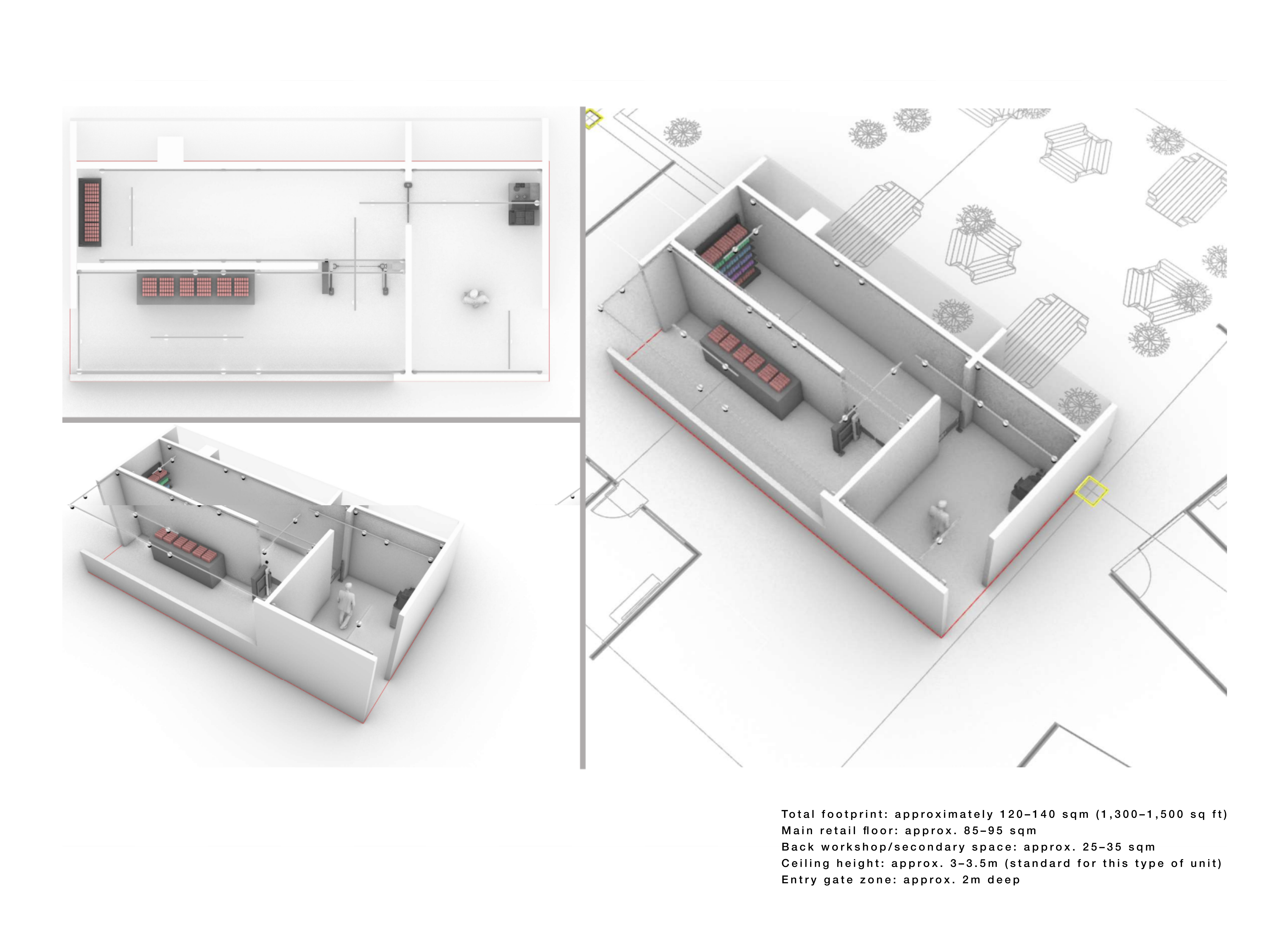
AiFi's camera system dictated the physical layout before design could begin. Ceiling-mounted hardware created no-go zones — restricting where signage could hang, how high displays could sit, and which walls could take full-bleed graphics. Every spatial decision had to be stress-tested against the tech infrastructure first.


Sub-brand within a global system

Frictionless had to function as a sub-brand. Distinct enough to feel designed for purpose, but built entirely within the parent brand's approved colour palette, signed off by global brand before anything moved to production. The creative challenge was finding enough range within an existing system to make the space feel crafted, not retrofitted. Every typographic and layout call was a negotiation between differentiation and compliance.


Making AI feel safe, not surveilled

A store with no staff and cameras tracking movement could feel cold very quickly. The identity and environmental design had to compensate . With every wall, wayfinding decision, and line of copy treated like a trust-building moment.


Files had to be right first time

With Brand Formula managing the physical build to a fixed installation schedule, there was little to no room for print amends after files were submitted. I built a tight proofing process. Every file signed off against a spec sheet before it left my hands. Anything that could go wrong either had to be factored in prior or fixed on an adhoc basis.

Designing around invisible infrastructure


AiFi's camera system dictated the physical layout before design could begin. Ceiling-mounted hardware created no-go zones — restricting where signage could hang, how high displays could sit, and which walls could take full-bleed graphics. Every spatial decision had to be stress-tested against the tech infrastructure first.


Sub-brand within a global system

Frictionless had to function as a sub-brand. Distinct enough to feel designed for purpose, but built entirely within the parent brand's approved colour palette, signed off by global brand before anything moved to production. The creative challenge was finding enough range within an existing system to make the space feel crafted, not retrofitted. Every typographic and layout call was a negotiation between differentiation and compliance.


Making AI feel safe, not surveilled

A store with no staff and cameras tracking movement could feel cold very quickly. The identity and environmental design had to compensate . With every wall, wayfinding decision, and line of copy treated like a trust-building moment.


Files had to be right first time

With Brand Formula managing the physical build to a fixed installation schedule, there was little to no room for print amends after files were submitted. I built a tight proofing process. Every file signed off against a spec sheet before it left my hands. Anything that could go wrong either had to be factored in prior or fixed on an adhoc basis.

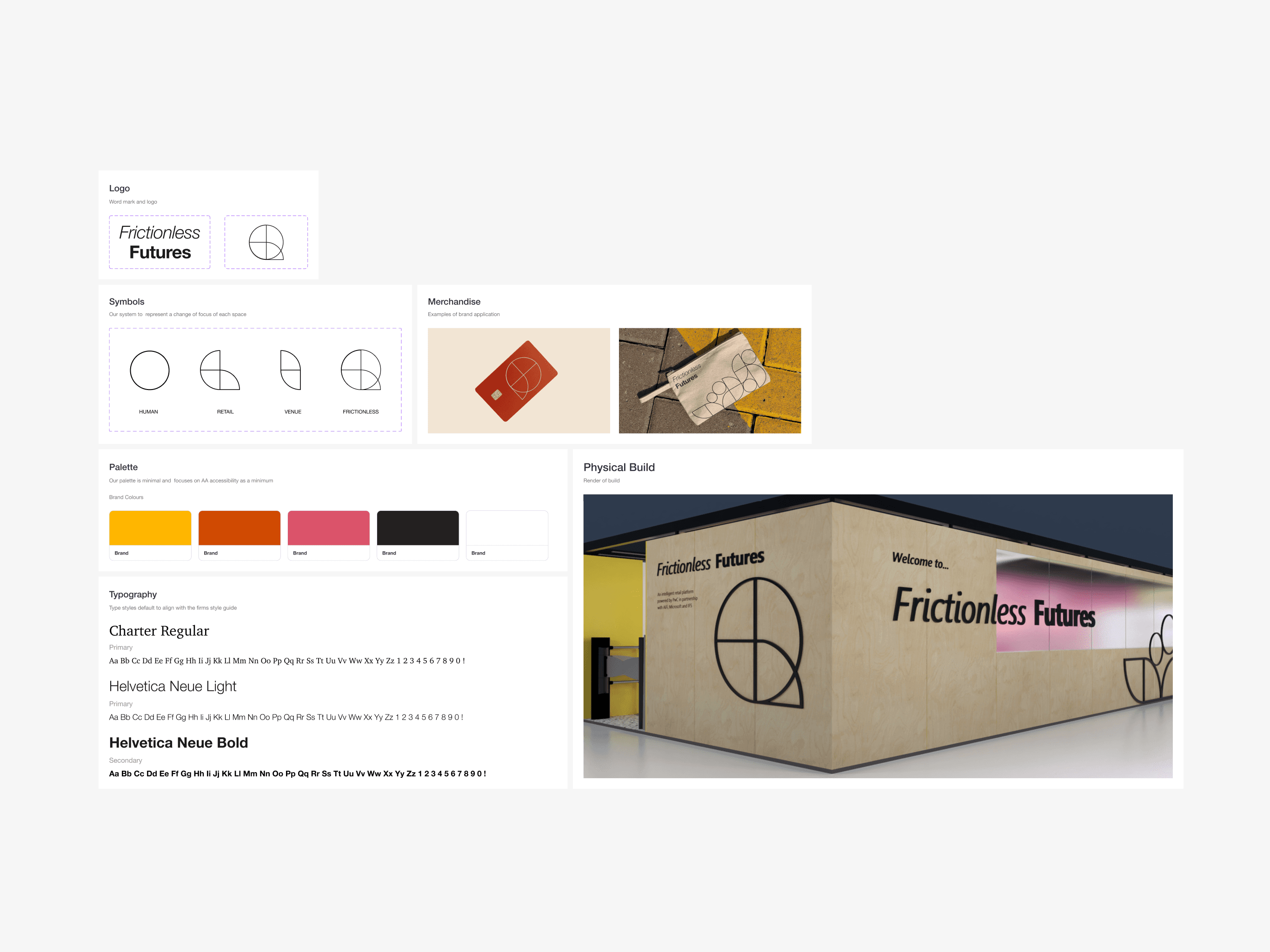
Brand Guidelines / Colour System

Sub-brand identity developed within parent brand colour palette — all values approved by global brand team before any files went to production
Production Process

Once the brand system was locked, I built a full production file set in Figma — organised by environment zone, print format, and supplier.


Every file was packaged with bleed, crop marks, and a spec sheet covering substrate, finish, and installation method. That file was the single source of truth throughout.


I managed all supplier briefings directly: large-format print, cut vinyl, signage fabrication, merch. Amend cycles were tracked with version control so nothing went to print without a dated approval.


One mid-production challenge: the floor graphics began to peel after application. The initial solution was a non-slip laminate — but I resolved it more cost-effectively using a spot UV overlay on the base print, which was also more durable. No delay to the installation schedule.
Ready to Collaborate?

Open for new opportunities, freelance and permanent.

Entry / Gate Zone

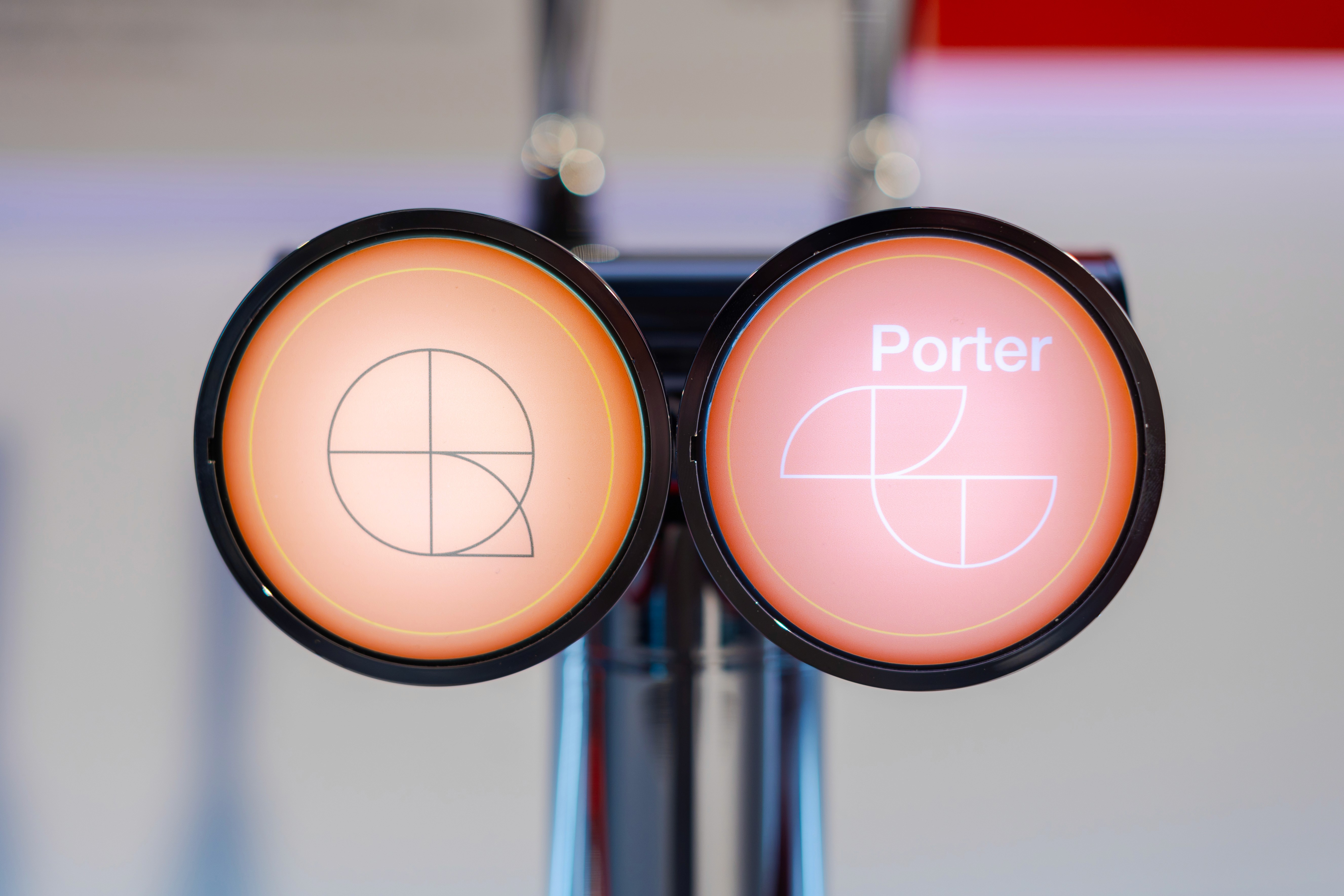
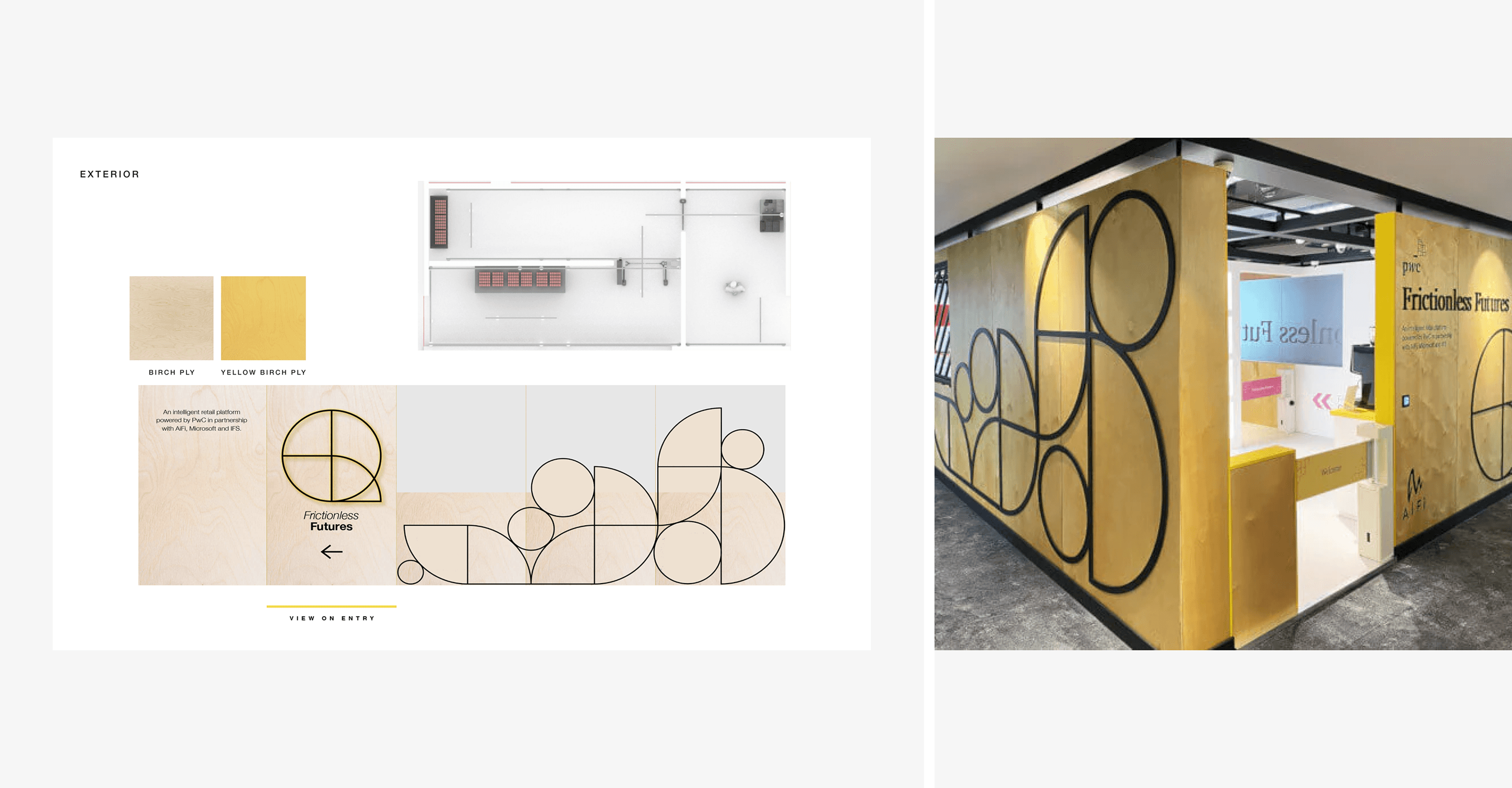
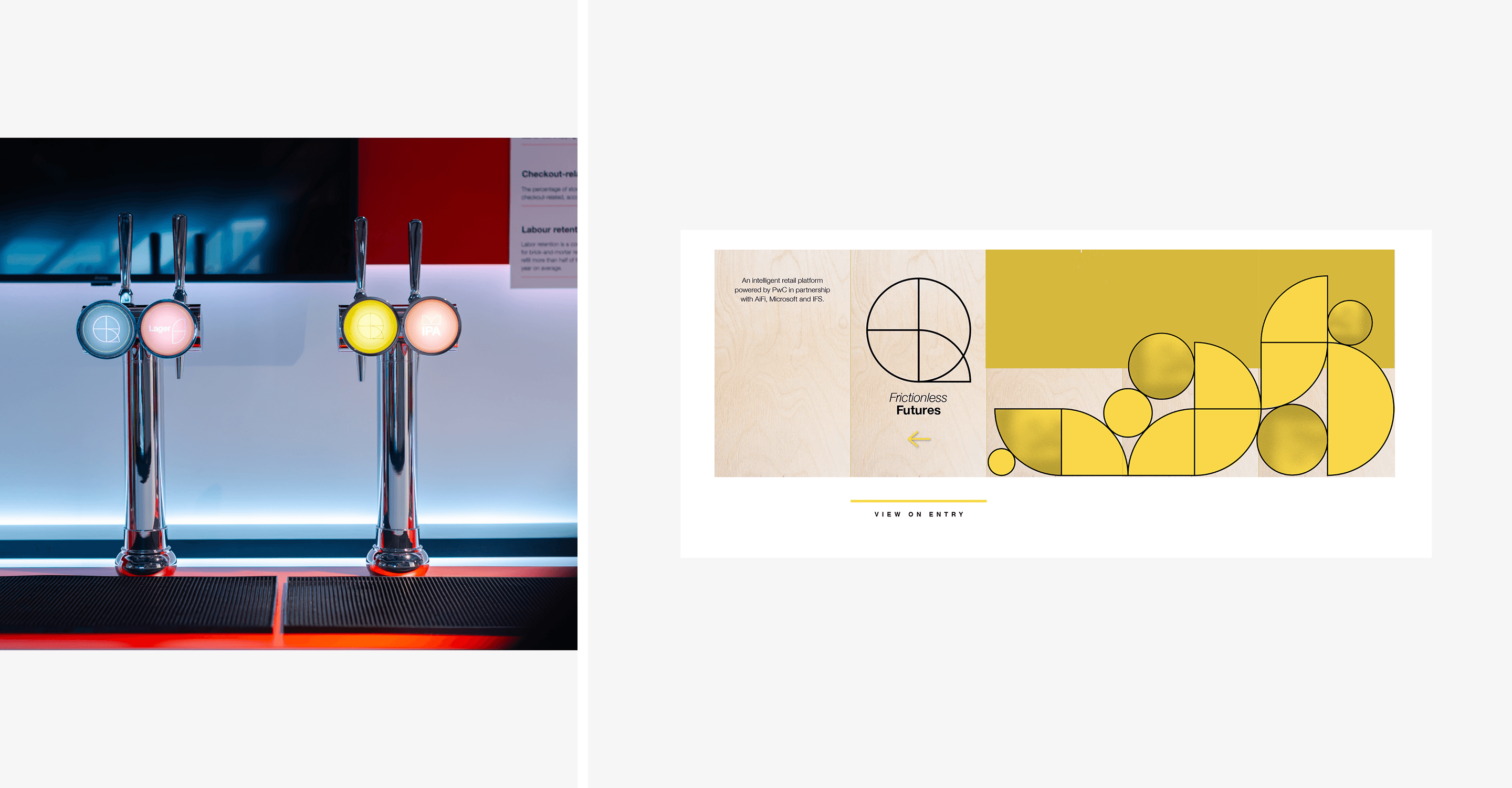
I conceived the exterior of the self-contained space to embody a minimalist and robust aesthetic, with a crucial emphasis on concealing the immersive experience within. Opting for birch ply as the outer material was a deliberate choice, not only for its durability but also for its versatility in being easily stained yellow, aligning seamlessly with the branding. This choice ensures both longevity and adaptability, particularly if the experiential space requires relocation in the future.
Commerce Store Zone

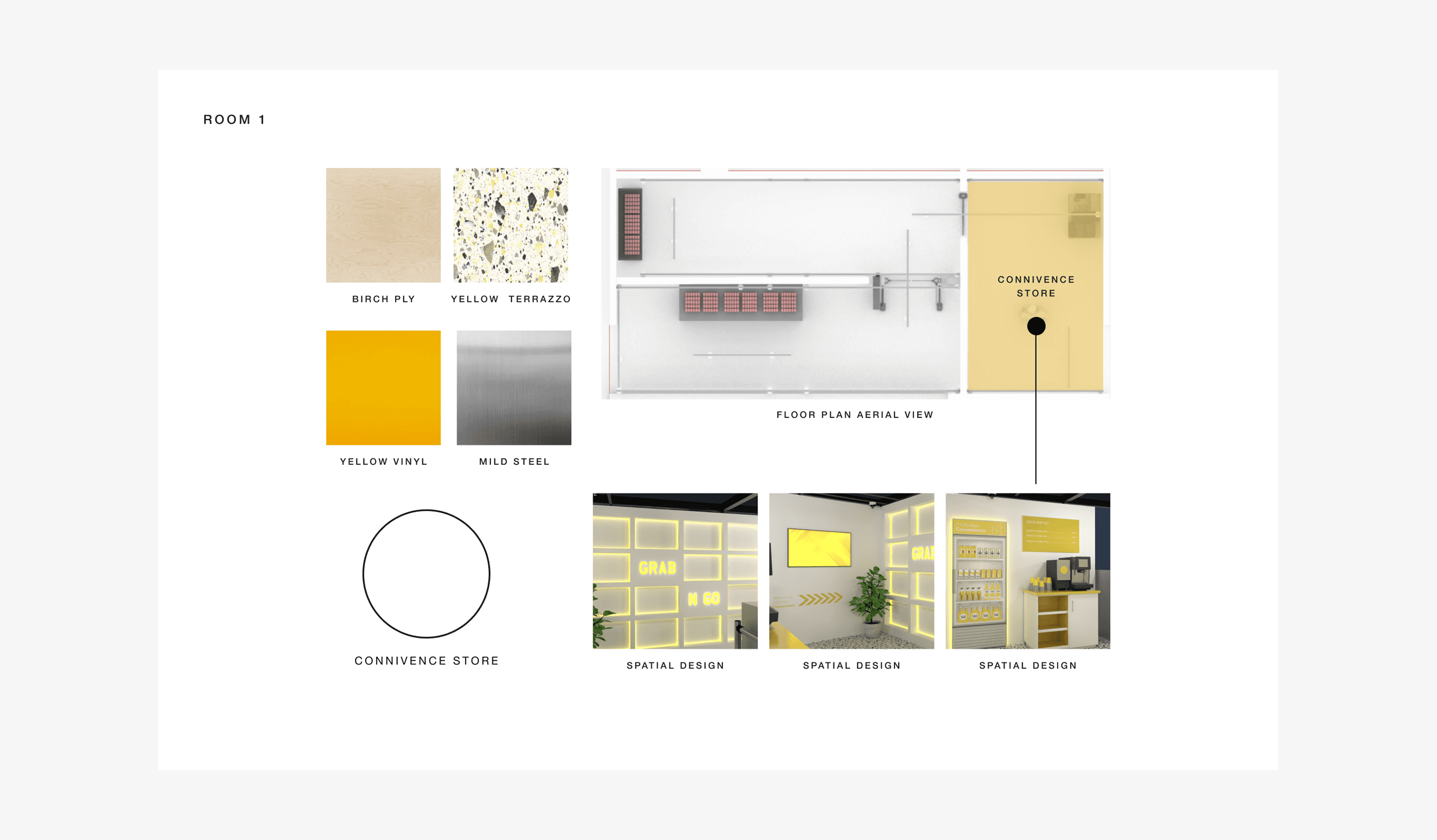
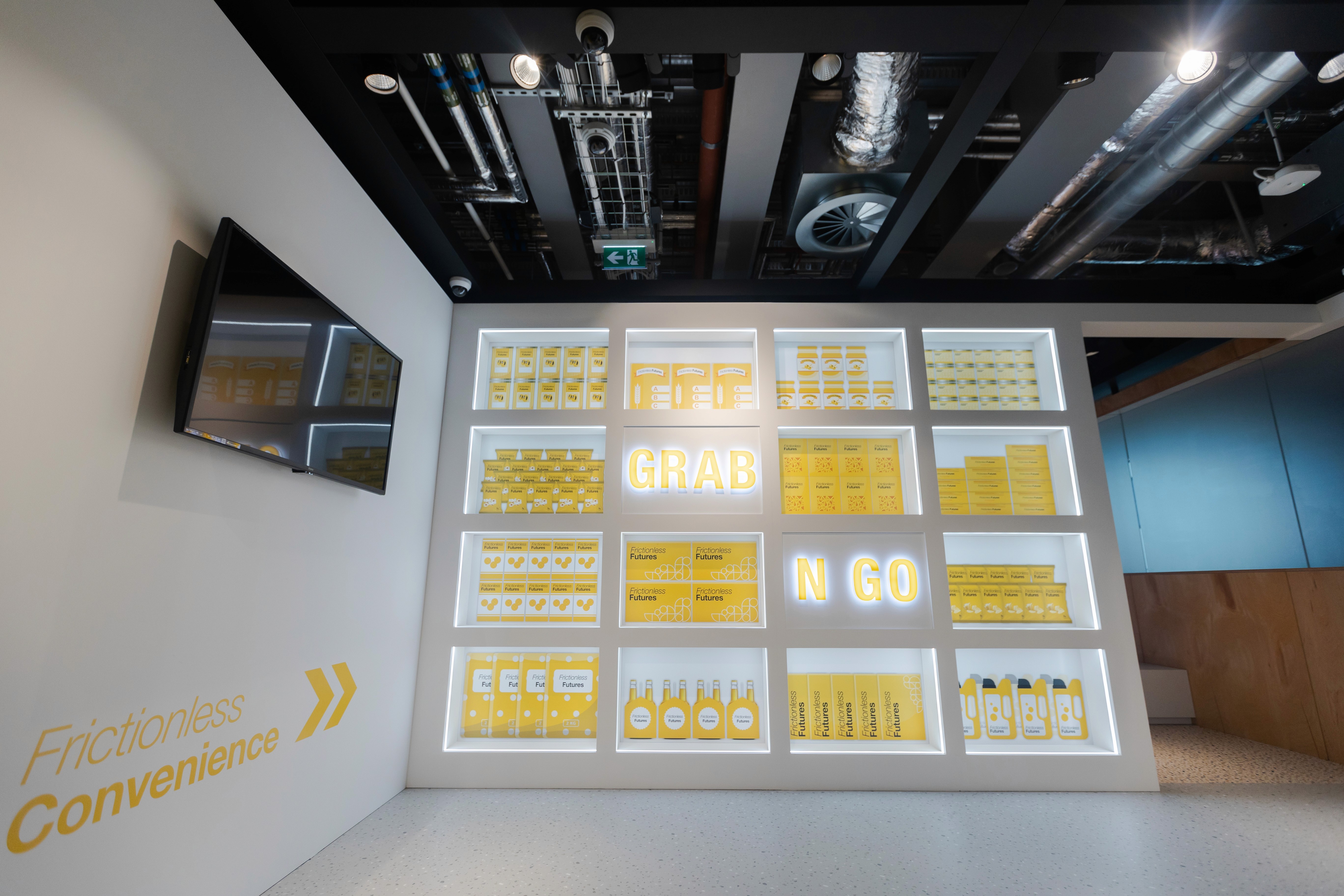
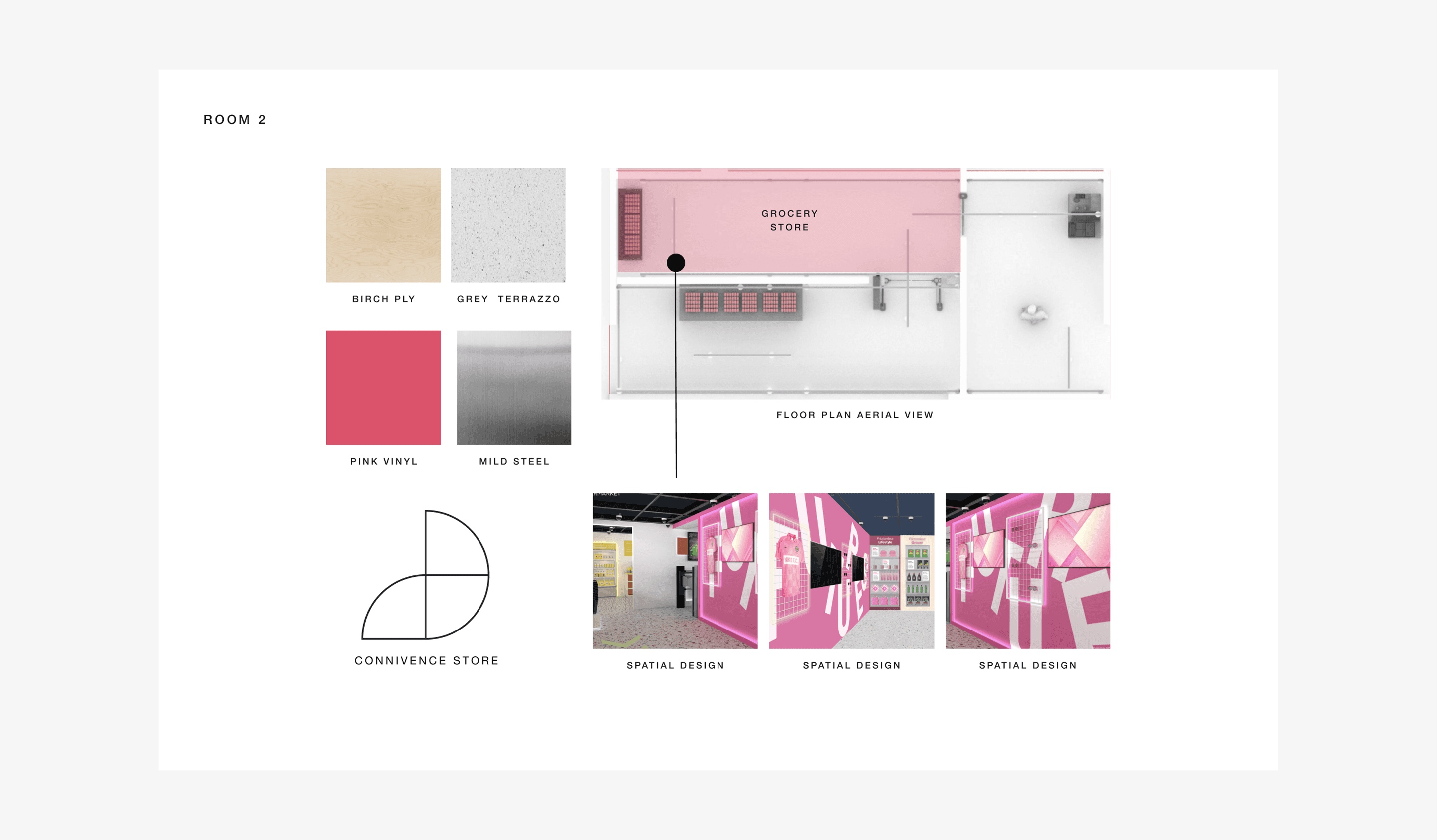
Connivence store


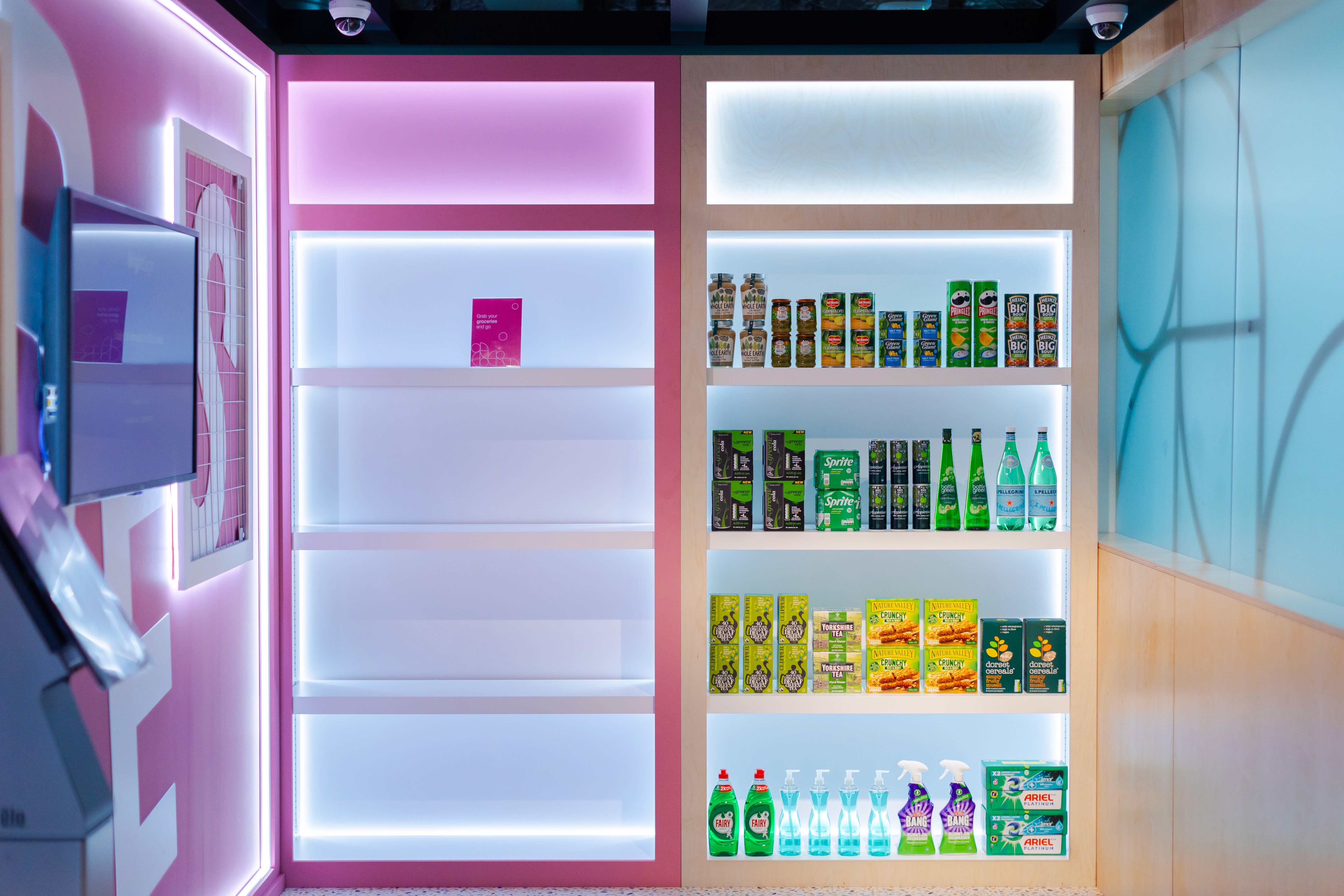
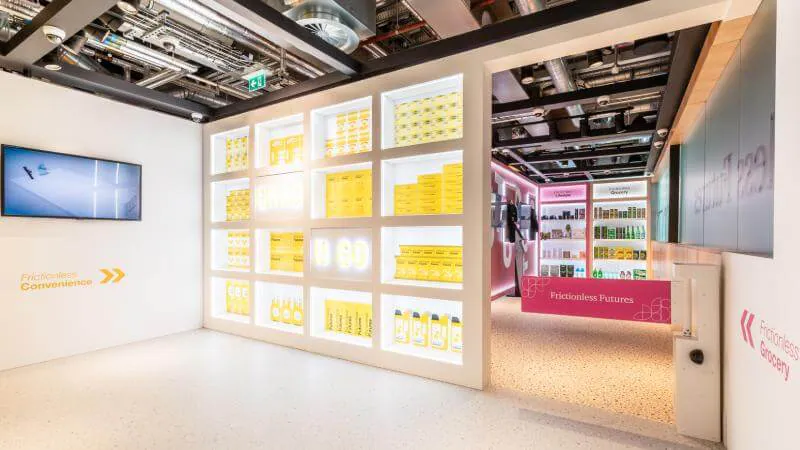
Commerce zone — shelf-edge labels, product zone headers, and wall graphics produced as a modular system, sized for repositioning without specialist installation
Directory & Retail Scans

Grocery and retail space


Directional and wayfinding signage — large-format print on [substrate e.g. 3mm aluminium composite / foamex], designed to work within AiFi camera clearance zones
Smart Venue / Screens

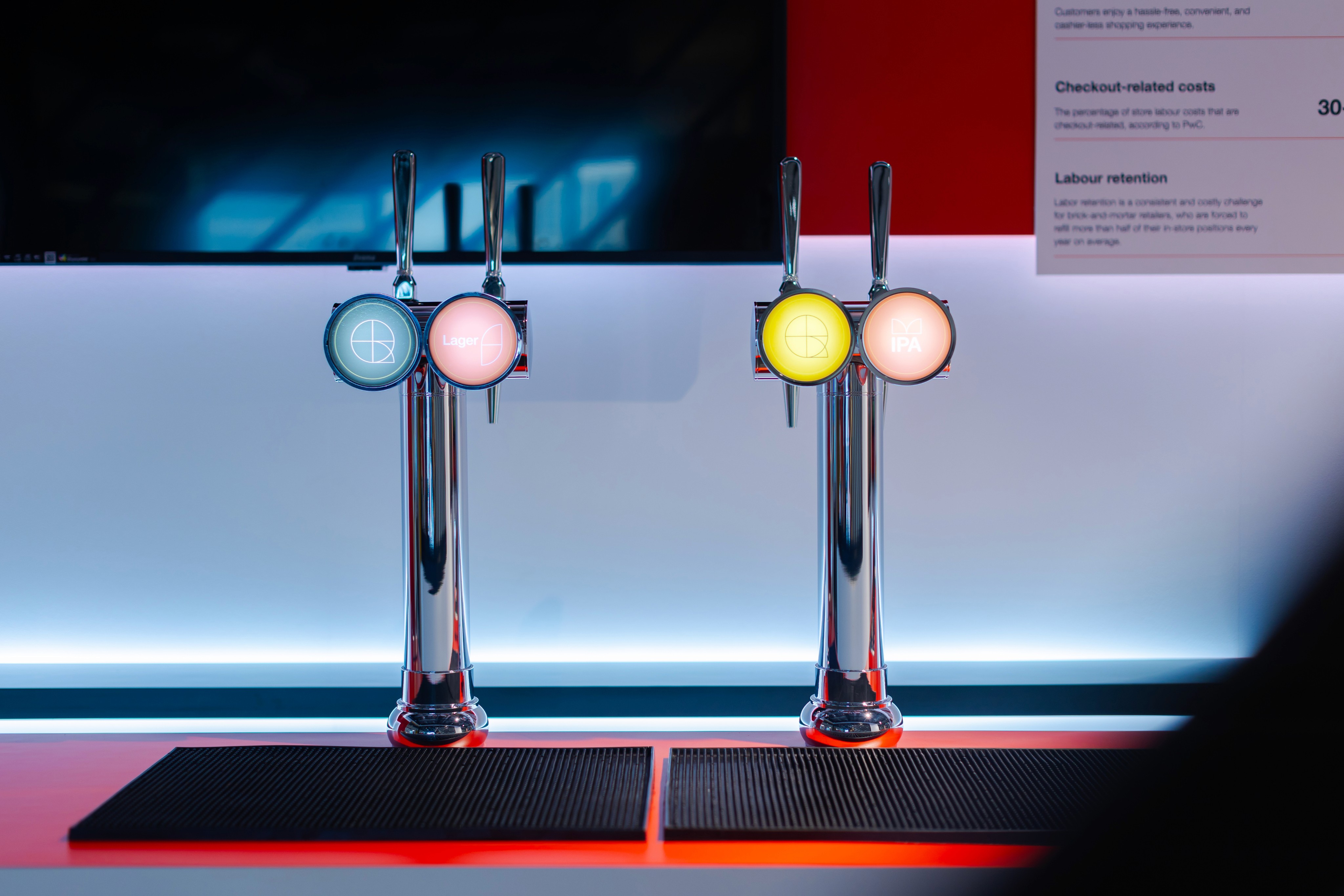
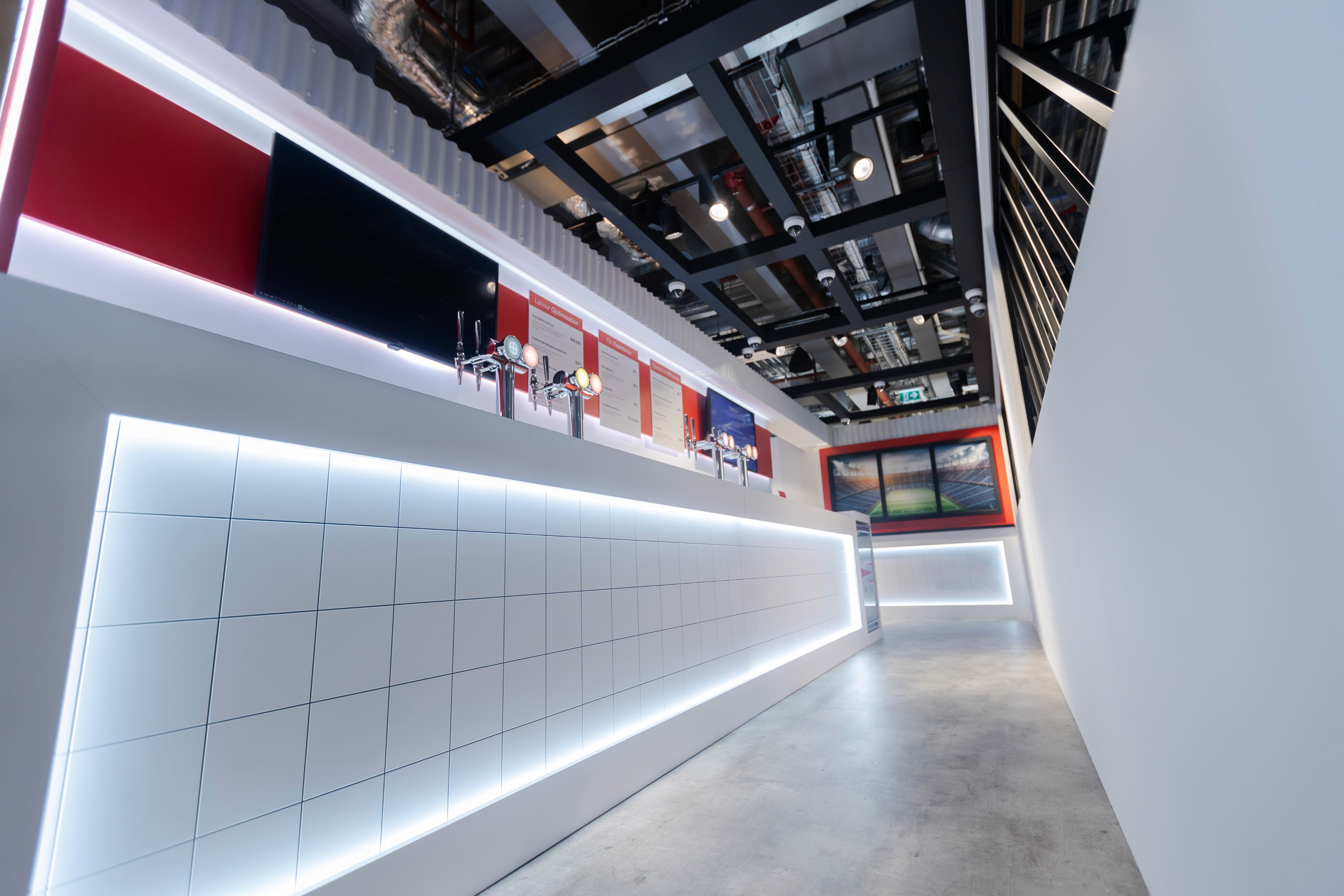
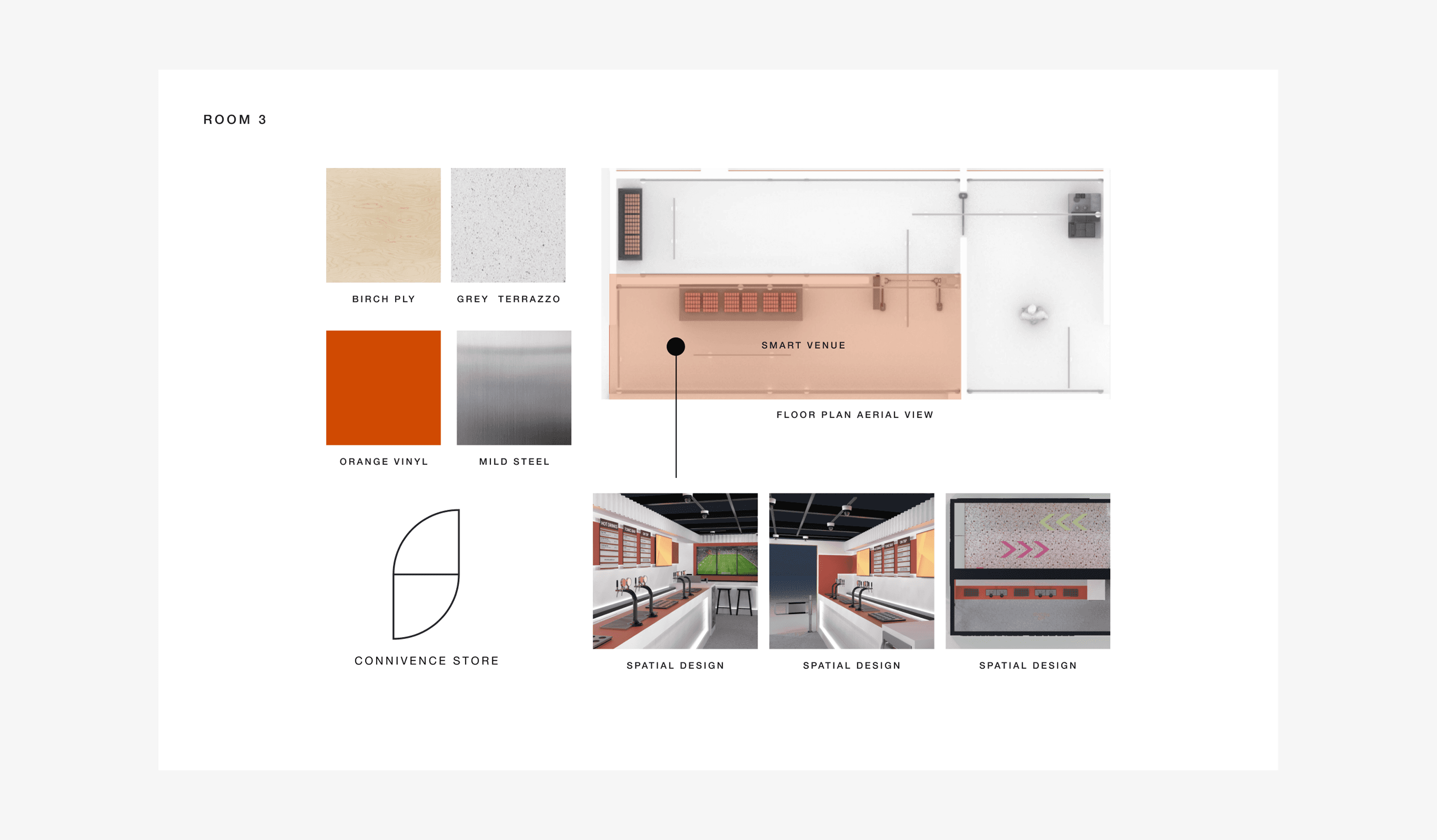
Smart venue


Digital screen content — assets delivered at 1920×1080, designed for ambient loop playback without audio, consistent with static brand system
Execution

The final environment spanned 130 sqm across two zones: a main retail floor and a dedicated workshop space.


Every surface was resolved — wall graphics, directional signage, product zone labels, entry and exit gate branding, digital screen content — all working from the same system, scaled to context.


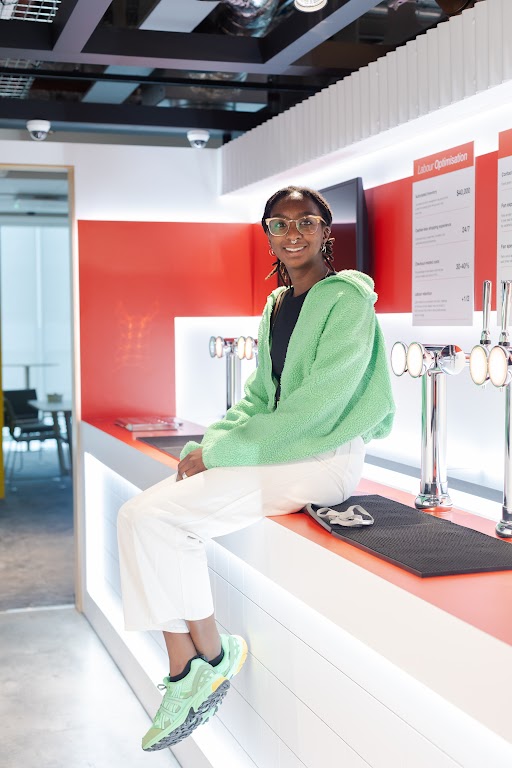
The workshop space ran a parallel identity: same brand language, adapted for a longer-dwell, education-first environment. Printed materials, deck templates, and spatial graphics were produced to the same production standard as the retail floor, so the brand felt continuous whether someone was browsing or being briefed.


Digital screen content was delivered at 1920×1080 for ambient loop playback — no audio, consistent with the static brand system.

Birch ply was chosen for the exterior — durable, easily stained to brand yellow, and relocatable if the space needed to move. Every material decision had a reason.

Results & Outcomes

Everything delivered on time, on brief, signed off by global brand. No amends post-installation.


We built something that hadn't been done at this scale in the UK before — a fully autonomous retail experience in an office space that turned a technology concept into a physical brand world people could actually walk into. The brief was to make AI feel human. The space did that.


At launch, the client reported 55% of UK consumers said they were ready to switch to frictionless retail. The brand was ready to meet them.

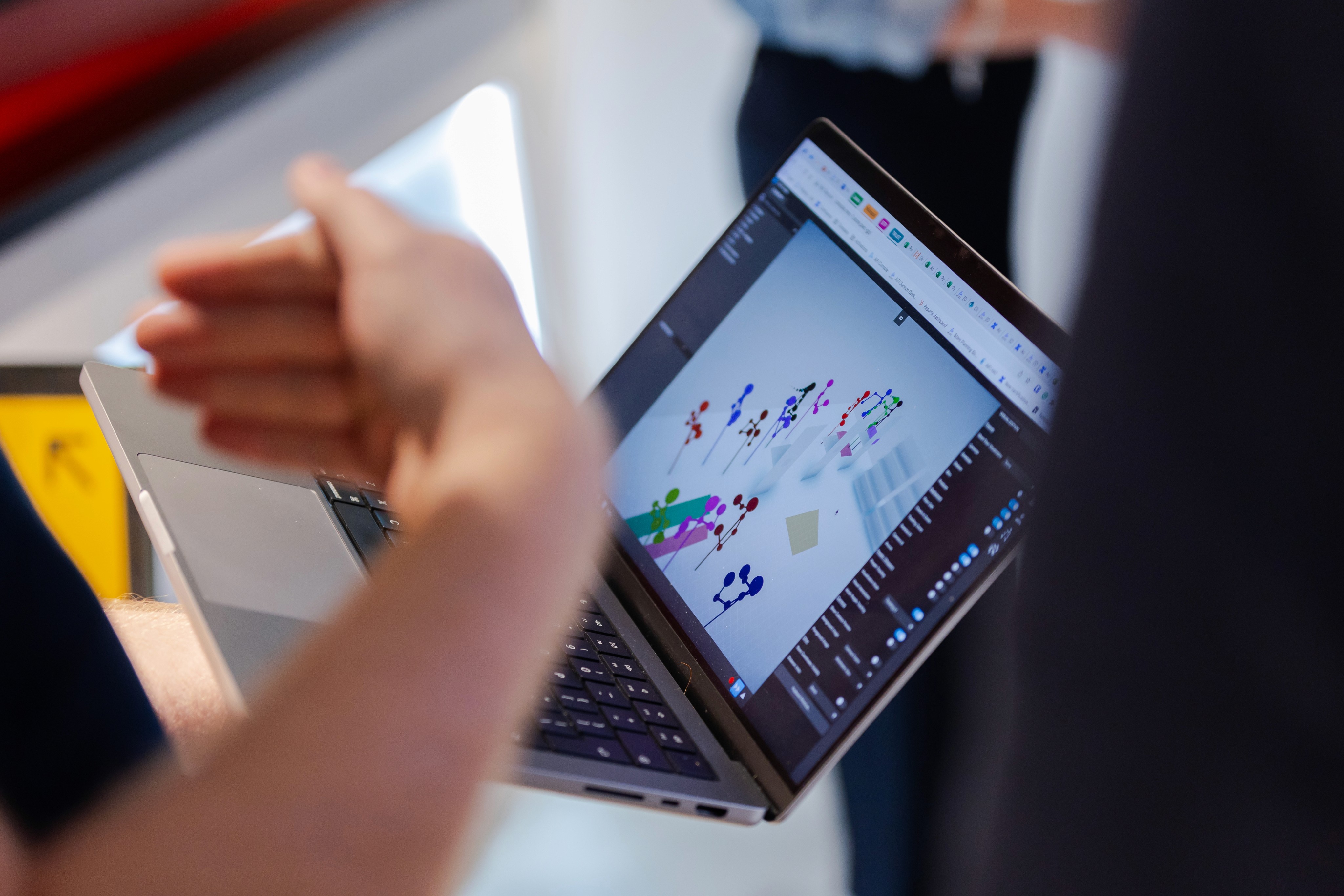
Select space images
Ready to Collaborate?

Open for new opportunities, freelance

and permanent.

ANDERHAUS

Ready to Collaborate?

Open for new opportunities, freelance and permanent.